Academy
2026 Weekend Writers’ Retreat with A Public Space
Thursday, October 8 – Sunday, October 11 Kaatsbaan Cultural Park, 120 Broadway, Tivoli, New York
This year's retreat will be held Thursday, October 8, 2026 - Sunday, October 11, 2026 at Kaatsbaan Cultural Park, featuring an expanded number of instructors and on-site accommodations.
In the morning, join workshops with authors Jo Ann Beard, Mary-Beth Hughes, Tracy O'Neill, Han Ong, Robert Sullivan, Peter Trachtenberg, and Ada Zhang, with opportunities to engage in generative exercises. Enrollment will be capped at 8 participants per workshop. In the afternoons, attend literary salons hosted by Samantha Hunt, Amitava Kumar, and Sharifa Rhodes-Pitts, a movement class by Sondra Loring, and a conversation with A Public Space editor Brigid Hughes. The weekend culminates with a celebratory dinner on Saturday catered by Tables of Contents.
MORNING WORKSHOPS
- Robert Sullivan, Reading and Writing Landscapes
- Mary-Beth Hughes, Narrative Duets
- Han Ong, Desire is Velocity
- Tracy O'Neill, Propulsive Technique: Metaphor as an Engine for Plotting, Voice, and Character
- Ada Zhang, Making Old Into New
- Jo Ann Beard, Interpreting Memory—SOLD OUT
- Peter Trachtenberg, Who Do You Think You Are?: Creating the Narrator—SOLD OUT
AFTERNOON AND EVENING TALKS
- Sharifa Rhodes-Pitts
- Samantha Hunt
- Amitava Kumar
- Brigid Hughes
Kaatsbaan Cultural Park—long a creative home and retreat for dancers, choreographers, performers, and composers—is located in Tivoli, New York, in the Hudson Valley, about two hours from New York City and one hour from Albany.
DATES
Thursday, October 8 - Sunday, October 11
in person
LOCATION
Kaatsbaan Cultural Park
120 Broadway
Tivoli, NY 12583
COST
includes cost of attendance and all meals
- Early Registration (June 2 – July 2): $875
- Regular Registration (July 3 - August 15): $975
- Late Registration (after August 15): $1,125
HOUSING
On-site housing is sold out. However, applicants will have the opportunity to join a waitlist for on-site housing after they are accepted. You may also apply as a non-residential participant, if you live locally or are able to arrange your own accommodations.
Retreat participants stay on-site at Kaatsbaan (Dancers' Inn and Gatehouse Apartments) or the Suminski Innski, located a 5-minute walk from the retreat. Dancers’ Inn provides motel-style accommodations, bucolic views, and private baths. The two-bedroom Gatehouse Apartments provide private kitchens, baths, and lounge areas. Suminski Innski is a bed and breakfast, overlooking the Hudson River and Catskill Mountains.
Bedroom w/ Private Bathroom: +$600— SOLD OUTBedroom w/ Shared Bathroom: +$475— SOLD OUT
REGISTRATION
Registrations will be reviewed on a rolling basis. There is no fee to apply. Registrants must be 21 years of age by October 10, 2026. Capacity is limited, and applying early is recommended. Register here.
You will be asked to submit:
- A work sample of five (5) to ten (10) pages. Please note that these are generative workshops; your work sample gives us a sense of your interests.
- A cover letter (not more than two (2) pages) that includes a bio, brief artist's statement, and your writing goals for the retreat.
Note that only PDF or Word files (.doc and .docx) are accepted. Incomplete applications will not be considered.
Questions? Write [email protected].
CANCELLATION POLICY
A full refund (less $100 for administrative fees) will be processed for cancellations before August 15.
A 50% refund will be processed for cancellations before September 15.
There is no refund for cancellations after September 15.
RETREAT SCHEDULE
MORNING WORKSHOPS
Robert Sullivan | Reading and Writing Place
The foundation of all writing—fiction, memoir, poetry, nonfiction—is the art of seeing. In this workshop, examine how art, philosophy, heritage, history, and language inform how we observe: what we notice, and often miss, and how our focus on place informs our singular creative making. We'll look at the compositions of land artists; and at the ways poets, essayists, and novelists have captured the texture of place and act of seeing in their work.
We'll put some of these ideas into practice, using maps and drawings and a few simple protocols to consider how we picture ourselves in places—and maybe rewire, even momentarily, how we perceive the things around us.
Mary-Beth Hughes | Narrative Duets
How do your characters move through a scene? How do they interact? avoid? embrace? Much of how I think about narrative is shaped by my experience as a dancer. Moving through Merce Cunnigham's studio, I learned to see narrative as a sequence of patterns, not enacted, but embodied. In this generative workshop, we'll explore the idea of narrative patterns, with a focus on narrative duets. We'll look at passages from Tolstoy's Anna Karenina, among other work, for patterns to mark and move through and break away from. Each day of the workshop, we'll take a character through various patterns of encounter. With surprises and interruptions. We'll deepen (and disrupt) relationships underway. Consider patterns of shape and time and value and intensity. Experiment, explore, and see what happens.
Tracy O'Neill | Propulsive Technique: Metaphor as an Engine for Plotting, Voice, and Character
The great Neil Postman declared, "A metaphor is not an ornament. It is an organ of perception. Through metaphors, we see the world." A fecund metaphor recasts a grand societal pitfall, turns the reader's attention to a particular quality in a setting, or creates a startling image. Yet it can also serve as an engine for the work of the writer, attempting to see the world of the narrative yet to be written. In this workshop, we will not simply explore producing apt metaphors but dynamic ones that can help the writer to map and propel a narrative or essay. How can metaphor create plot pathways in the mind of the author? Define the voice of the project? Develop characters? How can metaphor seed possibilities for the writer while maintaining a sense of form and cohesion?
Han Ong | Desire is Velocity
Nearly all writers want to write with a feeling of “forward momentum”: either hurtling ahead, or placing one steady foot in front of another. Perhaps one way to achieve this is to view story through the prism of “desire”: Writing a story is the act of following a character’s desire through to its logical conclusion. The story, then, becomes the arrow shot out of the bow of a character’s desire. Forward momentum. In this workshop, when we interrogate a character’s desire, we learn to weed out these options: “I want to be happy” or “I would like to be fulfilled.” Such generic formulations might as well be no formulations at all.
This is closer to what we are looking for, for example: “I want a green fake fur coat that I saw in the window display of Woolworth’s at the corner of Astor Place and Lafayette Street.” What does your character want? Furthermore, what does a second character want? Are they in harmony, or in opposition? What does the story of two harmonizing desires look like? How do you configure the story with opposing desires? Desire is velocity.
Jo Ann Beard | Interpreting Memory — SOLD OUT
In this workshop, we will focus on personal history narratives to discover what makes a compelling memoir. This will require both self-discovery and discovery of something outside the self. We’ll practice the art of thinking and of self-examination—both involving silence and separation from distraction, and the ongoing work of developing a relationship with one’s own intellect, and one’s own past. We’ll work on fluency through a series of in-class writings, and learn to apply keen editing skills to our own sentences and paragraphs.
Peter Trachtenberg | Who Do You Think You Are?: Creating the Narrator — SOLD OUT
In almost all memoir and personal essay and in much fiction, as well, one has a distinct sense of a person speaking from the page, maybe from beyond the page. Hence the recognition and even identification readers feel in relation to writers as different as Joan Didion and Annie Ernaux, David Sedaris and Samantha Irby, Eileen Myles and Hua Hsu. This workshop is dedicated to crafting the character called the Narrator, who comes into being as soon as a writer types the word I but nevertheless is not I, and not you, either—not quite. We’ll experiment with voice, chronology, memory, invention, and association and explore the moving line between revelation and oversharing, reticence and evasiveness.
Ada Zhang | Making Old Into New
It’s been said before that cliches are the compost of truth. To follow the metaphor to the end, that would mean that what’s been tried before can be put back into the ground and tried again, becoming the sustenance for new truths to flourish. For the ambitious writer, this requires risking unoriginality, cliché, sentimentality, and all manner of bad writing in order to break fresh ground.
In this workshop we will participate in the tradition of homage, looking at beloved stories from the past to create new work. The novelist Margot Livesey, in a craft essay from her book The Hidden Machinery, conceives of homage as a kind of “close borrowing [that] has been with us for centuries, perhaps as long as people have been making art.” We will use the framework from her essay to guide our inquiries, generating writing that is original not despite its origins but because of them.
LITERARY TALKS, CLASSES, AND MORE
Samantha Hunt | Chalk Outline: Sinkholes in W.G. Sebald
A close reading of W.G. Sebald's "Dr Henry Selwyn" (Chapter 1, The Emigrants) will unbury the soft places where memory is a destroyer as we uncover writing that hides cavities, decay, veneers, deceptive panels, wormholes and secret tunnels of connection with the dead.
Amitava Kumar | Naipaul Writing School
About twenty-five years ago, in a newspaper office in Delhi, I found pasted on a wall the "Rules for Beginners" that V.S. Naipaul had provided the young journalists working there. The rules were useful; I used them myself. But I have ever since wondered, and worked at compiling, what I think of as Naipaul's "Rules for Practitioners." I would like to share those rules with you.
Sondra Loring | Wild Mind in Motion
Writers know the wild mind: that uncensored, associative, endlessly generative place that the best writing comes from. This session takes it off the page and into the body. Through guided movement, somatic awareness, and open-ended improvisation, we'll explore how sensation, breath, and physical play can unlock creative states and dissolve the blocks that sit between you and your truest expression. No movement experience needed — come exactly as you are.
Sharifa Rhodes-Pitts | Wayfinding
An ambulatory talk, departing from the Hudson Valley journeys of two Black women: Sojourner Truth, who walked out of Ulster County to freedom in 1826 and Sophia Burthen Pooley, an enslaved girl living in Revolutionary War-era Fishkill who was kidnapped into further bondage, in Canada, via the Hudson River.
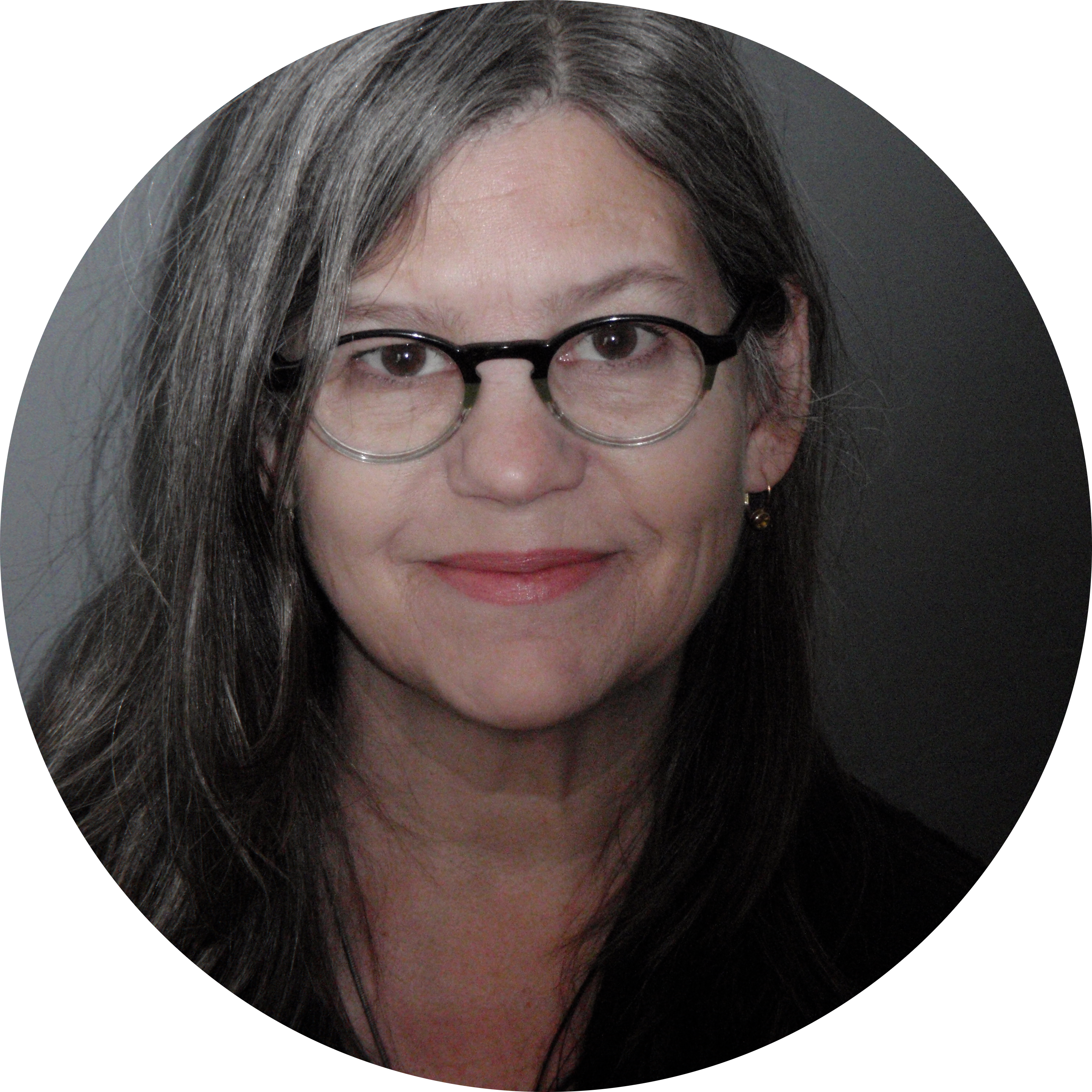
Jo Ann Beard’s books include the essay collections The Boys of My Youth and Festival Days, which was a New York Times Notable Book and Boston Globe Best Book of the Year; and the novel In Zanesville. The Collected Works of Jo Ann Beard was published last year by Serpent’s Tail. The recipient of a Whiting Award and an American Academy of Arts and Letters Award in Literature, she teaches writing at Sarah Lawrence College.

Mary-Beth Hughes is the author of two novels, a story collection, and, most recently, The Ocean House (Grove), a novel in stories. She has been a DeWitt-Wallace/Reader’s Digest Fellow at MacDowell, the Director’s Guest at Civitella Ranieri, and a guest at Yaddo. She has taught creative writing at Pratt Institute, NYU, Skidmore College, Bennington College Writing Seminars, and A Public Space. Her story “Double Happiness” appeared in A Public Space No. 7.
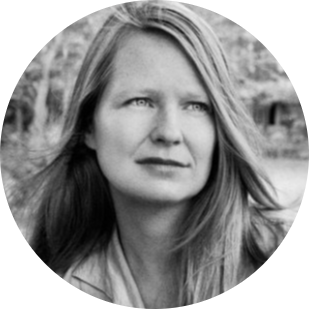
Samantha Hunt’s books include the novels The Seas (Tin House), The Invention of Everything Else (Mariner Books), and Mr. Splitfoot (Houghton Mifflin Harcourt); the story collection The Dark Dark and the genre-bending nonfiction work The Unwritten Book (both FSG). She is the recipient of a Guggenheim Fellowship, the Bard Fiction Prize, and a National Book Foundation 5 Under 35 honoree.
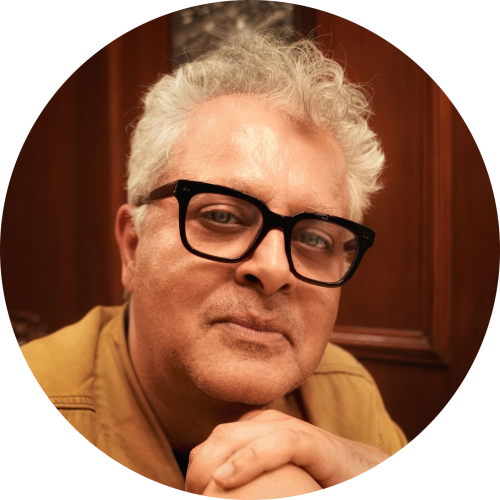
Amitava Kumar is the author of several books of fiction, including the novels My Beloved Life; Immigrant, Montana; and A Time Outside This Time (all Knopf). His nonfiction books include The Blue Book: A Writer’s Journal (HarperCollins) and Every Day I Write the Book: Notes on Style (Duke University). He teaches at Vassar College.
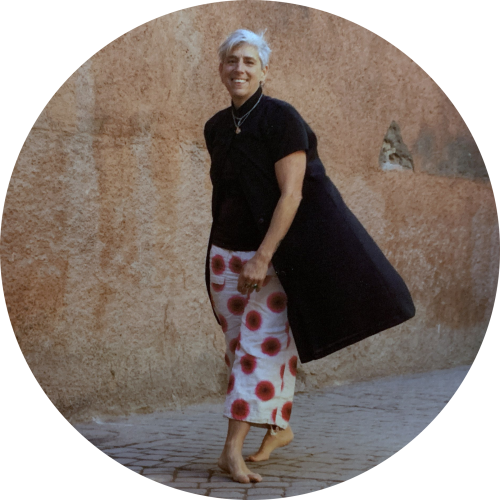
Sondra Loring is a queer movement artist, educator, and steward of a small botanical, bird, and fox sanctuary near Hudson, New York. Loring is a Bessie Award-winning artist and has danced with numerous companies in New York City, including those of Laura Dean, Neil Greenberg, Donna Uchizono, and David Rousseve. Her choreography has been presented at BAM, Danspace Project, and more. Sondra is also the director of Sadhana Center for Yoga and MovingPotential, bringing yoga, meditation, and creative practices into local jails, prisons, and recovery centers.
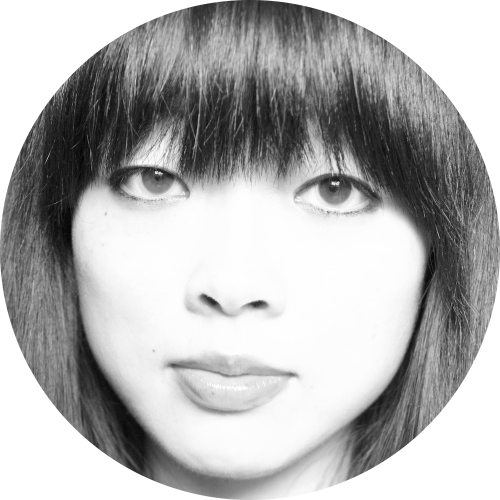
Tracy O'Neill is the author of the memoir Woman of Interest (HarperOne); and the novels The Hopeful (Ig) and Quotients (Soho). The National Book Foundation named her a 5 Under 35 honoree, and she has been longlisted for the Center for Fiction First Novel Prize. Her writing has appeared in Granta, The New York Times, The New Yorker, and elsewhere. She holds an MFA from the City College of New York; and an MA, an MPhil, and a PhD from Columbia University. She is an associate professor at Vassar College.
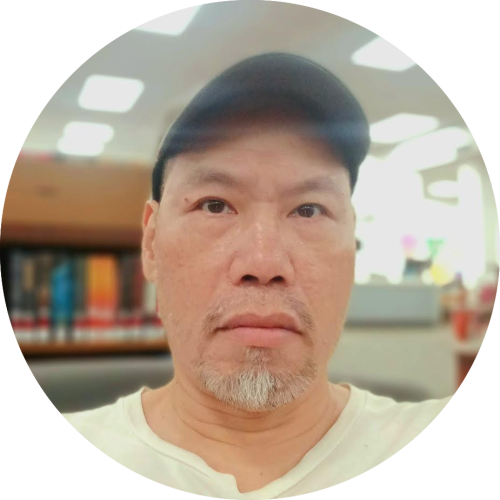
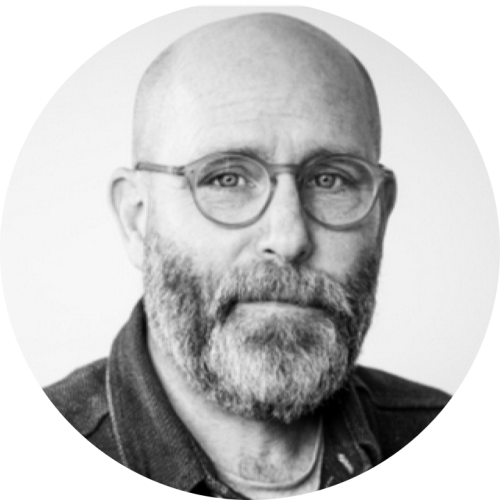
Robert Sullivan is the author of eight books, including Double Exposure: Resurveying the West with Timothy O'Sullivan (FSG) and Rats (Bloomsbury). He is the recipient of a Guggenheim Fellowship and an Arts and Letters Award in Literature from the American Academy of Arts and Letters. His story "Almanac" appeared in A Public Space No. 16.
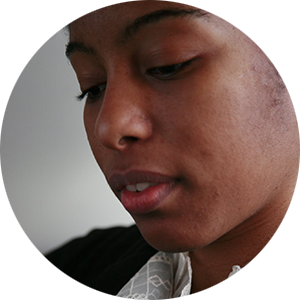
Sharifa Rhodes-Pitts is the author of Harlem Is Nowhere: A Journey to the Mecca of Black America, an essay from which appeared in A Public Space No. 12. The first volume of a planned trilogy on African-Americans and utopia (Harlem, Haiti, and the Black Belt of the American South), it was a New York Times Notable Book and a National Book Critics Circle Award finalist. She is also the author of a book for young readers, Jake Makes a World: Jacob Lawrence a Young Artist in Harlem, commissioned by MoMA and illustrated by Christopher Myers. She organizes collaborative public projects through the Freedwomen's Bureau and is an associate professor of writing at Pratt Institute. In 2022, she led an APS Together collective reading of Jean Toomer's Cane. She has lived in the Hudson Valley since 2019.
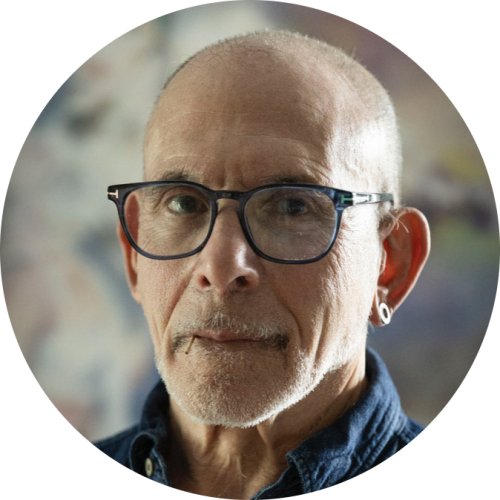
Peter Trachtenberg’s books include 7 Tattoos, The Book of Calamities, Another Insane Devotion, which was a New York Times Editors’ Choice, and The Twilight of Bohemia: Westbeth and the Last Artists in New York. He is an associate professor emeritus in the Writing Program at the University of Pittsburgh, and the recipient of a Whiting Award, a Guggenheim Fellowship, the Nelson Algren Award for Short Fiction, and a Bellagio residency. His story "The Chimney Girl" appeared in A Public Space No. 32.
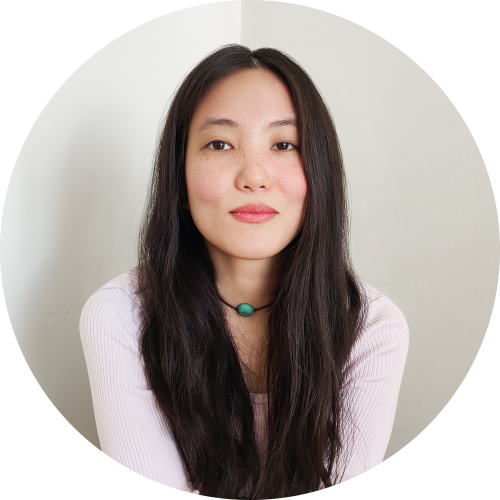
Ada Zhang is a National Book Foundation 5 Under 35 honoree and a Whiting Award winner. Her debut story collection, The Sorrows of Others, was published by A Public Space Books and was longlisted for the Story Prize. She has been published in McSweeney’s, Texas Monthly, Alaska Quarterly, and American Short Fiction, among other periodicals. She was the 2023 James C. McCreight Fiction Fellow at the University of Wisconsin and is currently teaching at the Iowa Writers’ Workshop as a visiting assistant professor. She is from Austin, Texas. Her story “Compromise” appeared in A Public Space No. 29. (Photo credit: Beowulf Sheehan)
More Upcoming Events
APS Together
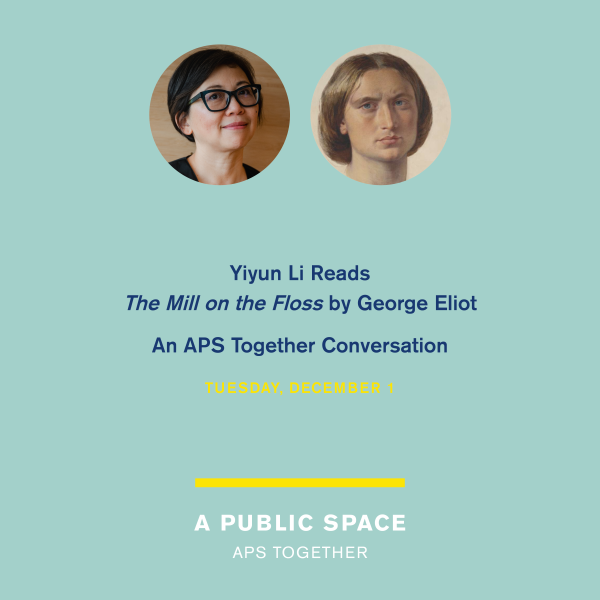
The Mill on the Floss: A Conversation with Yiyun Li
An APS Together finale conversation on George Eliot's novel The Mill on the Floss—an "epic of the human soul"—with APS Together host Yiyun Li and A Public Space editor Brigid Hughes.
Tuesday, December 1, 7:00pm Zoom